CANONICAL CUT DEFINITION
Miter cut vs. bevel cut
Two different axes.
A miter cut rotates the table relative to the fence. A bevel cut tilts the blade relative to the table. A compound cut uses both adjustments.
QUICK SCANTable rotation = miter. Head tilt = bevel.
- Miter changes the angle across the face of the workpiece.
- Bevel changes the angle through its thickness.
- Compound crown cuts combine both settings and require orientation control.
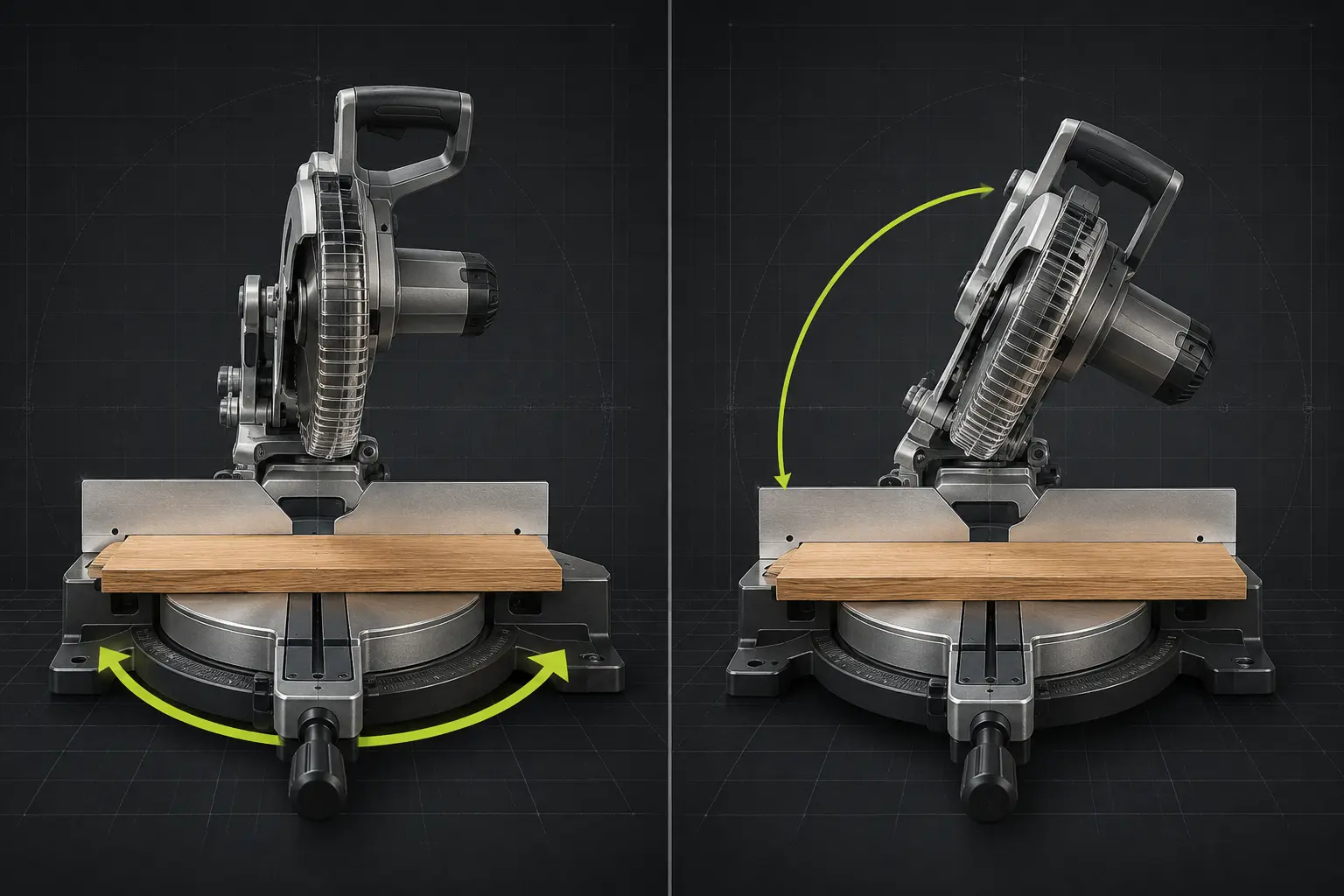
Follow the axis that moves.
The workpiece stays referenced to the fence and table. Table rotation creates the miter angle; head tilt creates the bevel angle.
Conceptual instructional graphic · verify the exact saw manualMiter, bevel, and compound cuts
| Cut | Machine movement | Common use | Capacity consequence |
|---|---|---|---|
| Miter | Table rotates left or right | Picture frames, casing, outside and inside corners | Usable crosscut width normally decreases as the miter angle increases. |
| Bevel | Saw head tilts left or right | Edge bevels, compound trim work | Vertical clearance and guard/fence relationships change. |
| Compound | Table rotates and head tilts | Crown molding cut flat | Both width and height constraints must be verified. |
COMMON FAILURE
Confusing the settings reverses the diagnosis.
If the table remains at 0° while the head tilts, that is a bevel—not a miter. Naming the axis correctly makes manuals, cut charts, calculators, and troubleshooting easier to interpret.
EXECUTION GATE
Mark the visible face before cutting.
Label top, bottom, inside, and outside faces. Confirm left/right orientation and make a same-profile scrap cut before committing installed-length molding.