CONSTRAINT-FIRST BUYING GUIDE
Best 12-Inch Miter Saw
Choose 12-inch only when repeated capacity—not aspiration—pays for the weight and blade cost.
BOTTOM LINEA model that clears the tallest crown or widest stock you repeatedly cut.
- Start with the cut and workspace constraint—not a popularity ranking.
- Reject any model that fails one hard requirement, even if it scores well elsewhere.
- Verify the current manufacturer manual before buying or cutting.
TRADE-BASED: CHOOSE THIS CLASS IF
A model that clears the tallest crown or widest stock you repeatedly cut.
EXPLICIT EXCLUSION
Do not buy the class for occasional 2x4 and baseboard work.
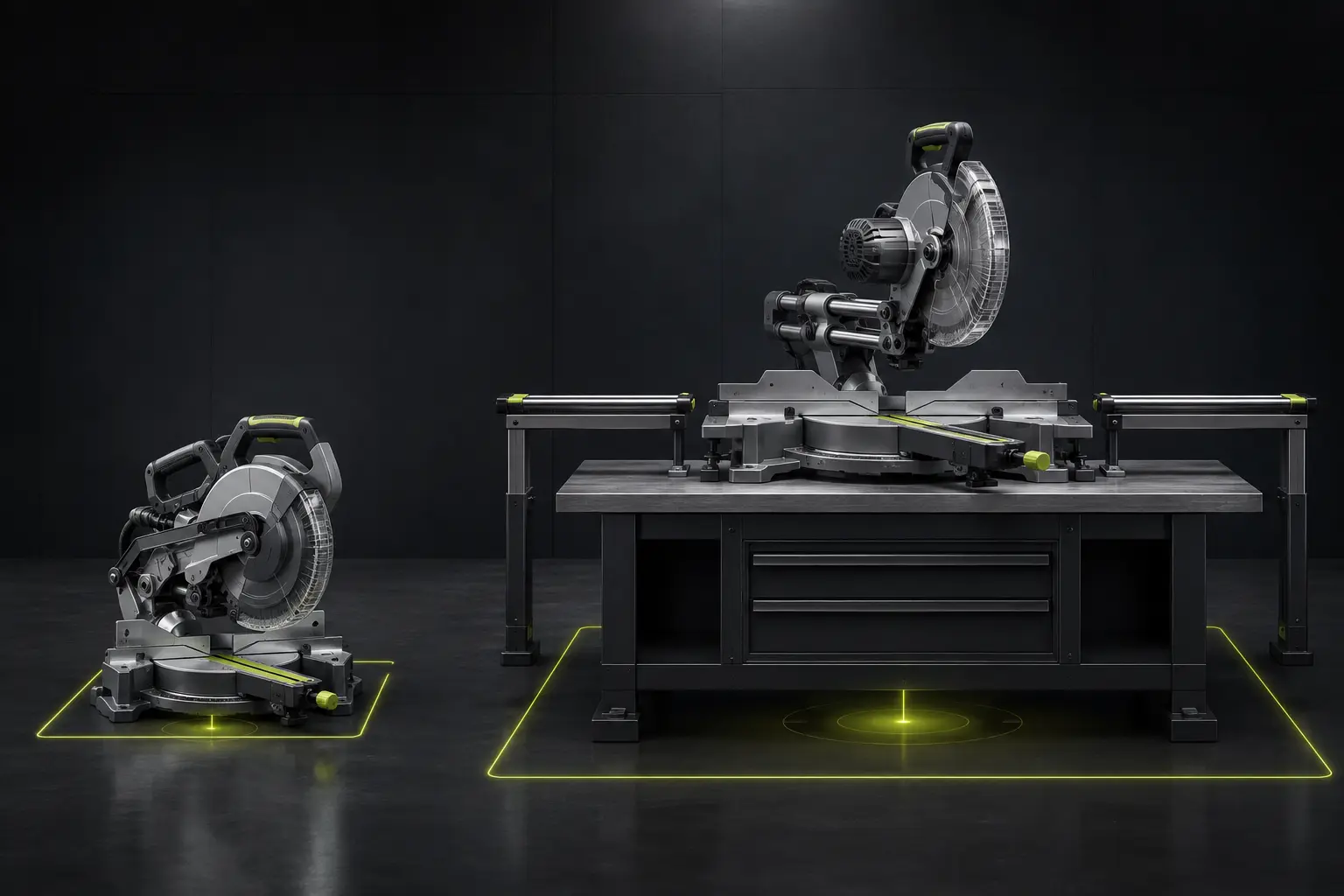
The same saw can score differently by buyer.
Weight, footprint, capacity, blade economics, and transport frequency determine fit—not a fake universal rating.
Conceptual instructional graphic · verify the exact saw manualTHE DECISION FUNCTION
Start with the constraints
- 01Maximum crosscut
- 02Vertical capacity
- 03Nested crown
- 04Bench footprint
- 05Transport
Three model records to investigate first
| Model | Blade | 90° crosscut | Nested crown | Weight | Evidence |
|---|---|---|---|---|---|
| DEWALT DWS780 | 12″ | 14″ | 7.5″ | 56 lb | Manufacturer source ↗ |
| Bosch GCM12SD | 12″ | 13.5″ | 6.5″ | 65 lb | Manufacturer source ↗ |
| DEWALT DWS716 | 12″ | 8″ | 6.625″ | 41 lb | Manufacturer source ↗ |
Specifications narrow the field; they do not prove hands-on performance. “Best” remains conditional on the constraints above.