CONSTRAINT-FIRST BUYING GUIDE
Best 10-Inch Miter Saw
The best 10-inch saw is the one that preserves blade economics without becoming a 60-pound compromise.
BOTTOM LINEMatch the slider or glide mechanism to required width, rear clearance, and carry frequency.
- Start with the cut and workspace constraint—not a popularity ranking.
- Reject any model that fails one hard requirement, even if it scores well elsewhere.
- Verify the current manufacturer manual before buying or cutting.
TRADE-BASED: CHOOSE THIS CLASS IF
Match the slider or glide mechanism to required width, rear clearance, and carry frequency.
EXPLICIT EXCLUSION
A heavy premium 10-inch glide is not automatically more portable than a 12-inch alternative.
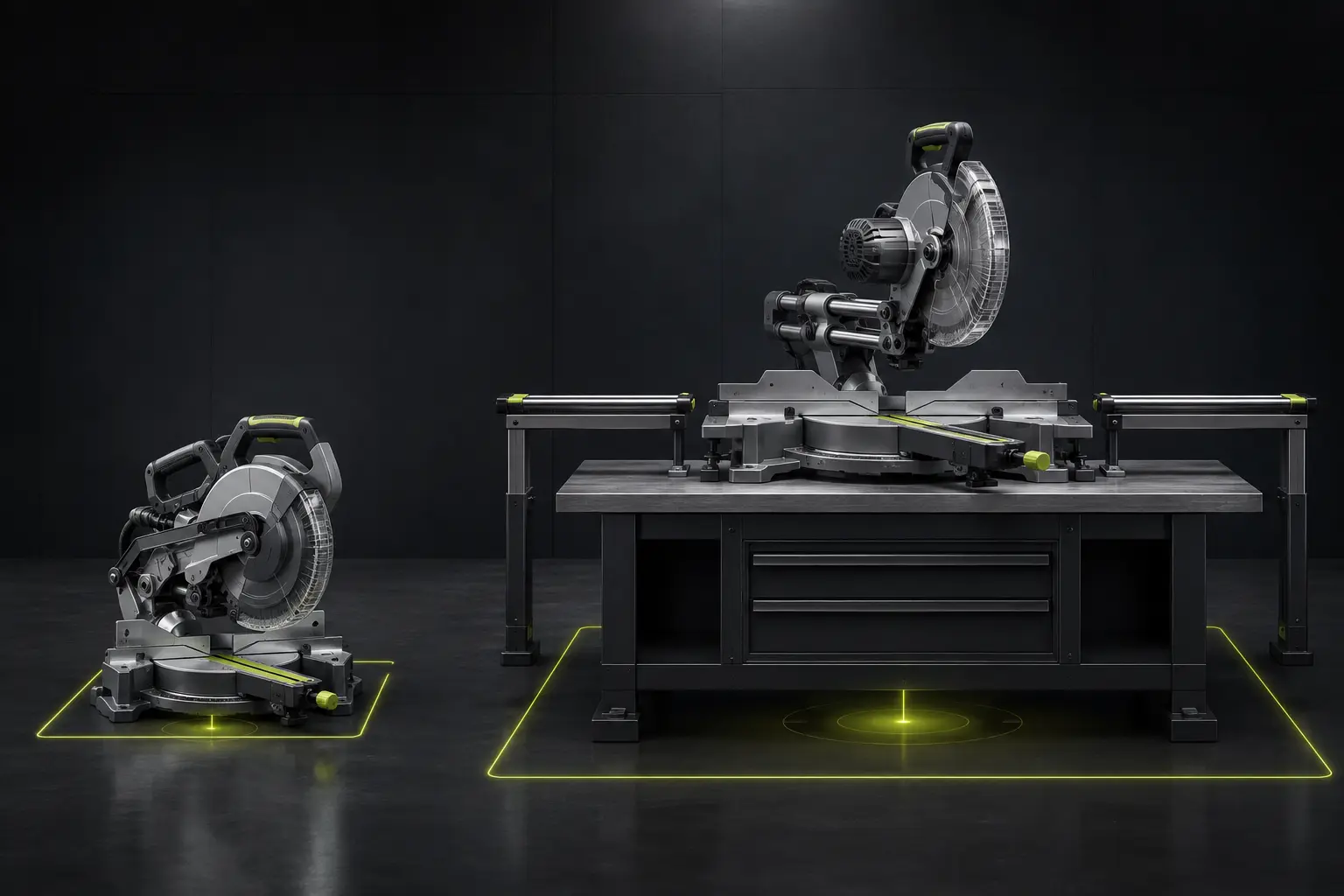
The same saw can score differently by buyer.
Weight, footprint, capacity, blade economics, and transport frequency determine fit—not a fake universal rating.
Conceptual instructional graphic · verify the exact saw manualTHE DECISION FUNCTION
Start with the constraints
- 0190° crosscut
- 02Nested crown
- 03Weight
- 04Rear clearance
- 05Blade cost
Three model records to investigate first
| Model | Blade | 90° crosscut | Nested crown | Weight | Evidence |
|---|---|---|---|---|---|
| Makita LS1019L | 10″ | 12″ | 6.625″ | 57.9 lb | Manufacturer source ↗ |
| Milwaukee 2734-21HD | 10″ | 11.39″ | 5.25″ | 45 lb | Manufacturer source ↗ |
| Bosch CM10GD | 10″ | 12″ | 6″ | 64 lb | Manufacturer source ↗ |
Specifications narrow the field; they do not prove hands-on performance. “Best” remains conditional on the constraints above.